Transcript
Flock Cameras: Security, Surveillance & Your Right to Privacy
We’re surrounded by technology that can track where we go, what we do and even recognize us. But who has access to all that data? Dr. Christie Gardner explains how surveillance technology can help solve crimes and protect communities, while emphasizing the importance of strong safeguards to protect our privacy and keep our data secure.
This transcript was created using speech recognition software. While it has been reviewed by human transcribers, it may contain errors. Please review the episode audio before quoting from this transcript and email hssdeansoffice@fullerton.edu with any questions.
Jessica Stern
I was at a bar mitzvah this weekend, and this 13-year-old kid spent pretty much his whole speech talking about Flock cameras and how we need to resist the surveillance police state.
This question of what is the balance between security and freedom has been on my mind for a long time. I’m thinking back to my modern European political philosophy class. I’m thinking back to Hobbes and really these questions about when we decide that security is more important than individual freedom.
This is not a new question, but given the advances in technology, it might feel new to a lot of people.
So, in order to delve into these questions, I have invited Dr. Christie Gardner, who is both faculty in Criminal Justice and Public Administration and also the director of the Center for Public Policy, to come help us make it make sense.
Let’s start with a lay of the land. How has technology changed over the last few decades in terms of law enforcement?
Christie Gardner
Well, first, thanks for having me. I’m happy to come and talk about this. It’s my wheelhouse and something I get excited about.
Before I was an academic, I worked in law enforcement. I started out as a police explorer when I was 16 years old, became a public safety dispatcher — a 911 dispatcher — and I was a crime analyst for a long time.
When I started my career, we had officers in patrol cars with notepads. They were taking notes on the notepads, writing down addresses that dispatchers would give them and then looking up where that address was if they didn’t know it by heart.
Sometimes you had obscure addresses and had to look them up in the Thomas Guide map book. They were handwriting their reports, which is why all caps and good penmanship were really important back in the ’80s and ’90s.
Fast-forward to today, and it’s a completely different landscape. Officers have access to all the latest laptops, apps, mapping and computers on their phones, just like we do.
When I was thinking about how things have changed, I think we can categorize it.
We’ve got digitization or digitalization. We now have computerized dispatch. We have enhanced 911 that accepts texts. Some 911 systems accept files, and some will actually allow callers to give dispatchers access to their phone so they can see what the person is seeing and see their location.
This technology has saved hikers here in Yorba Linda, close by, as well as in other places.
We have searchable databases. We have mobile computers. So much is digitized now.
Then we have cameras and sensors. We had traffic cameras back then, but they didn’t necessarily record. They were black and white. You couldn’t pan, tilt and zoom. You couldn’t retain that data or look back at it very much.
Now we have officer body-worn cameras. CCTV is prevalent all over the place. I went to school in England for my undergraduate and graduate degrees, and there was lots of CCTV throughout England. I couldn’t imagine a time when we would have that much CCTV here, and yet here we are.
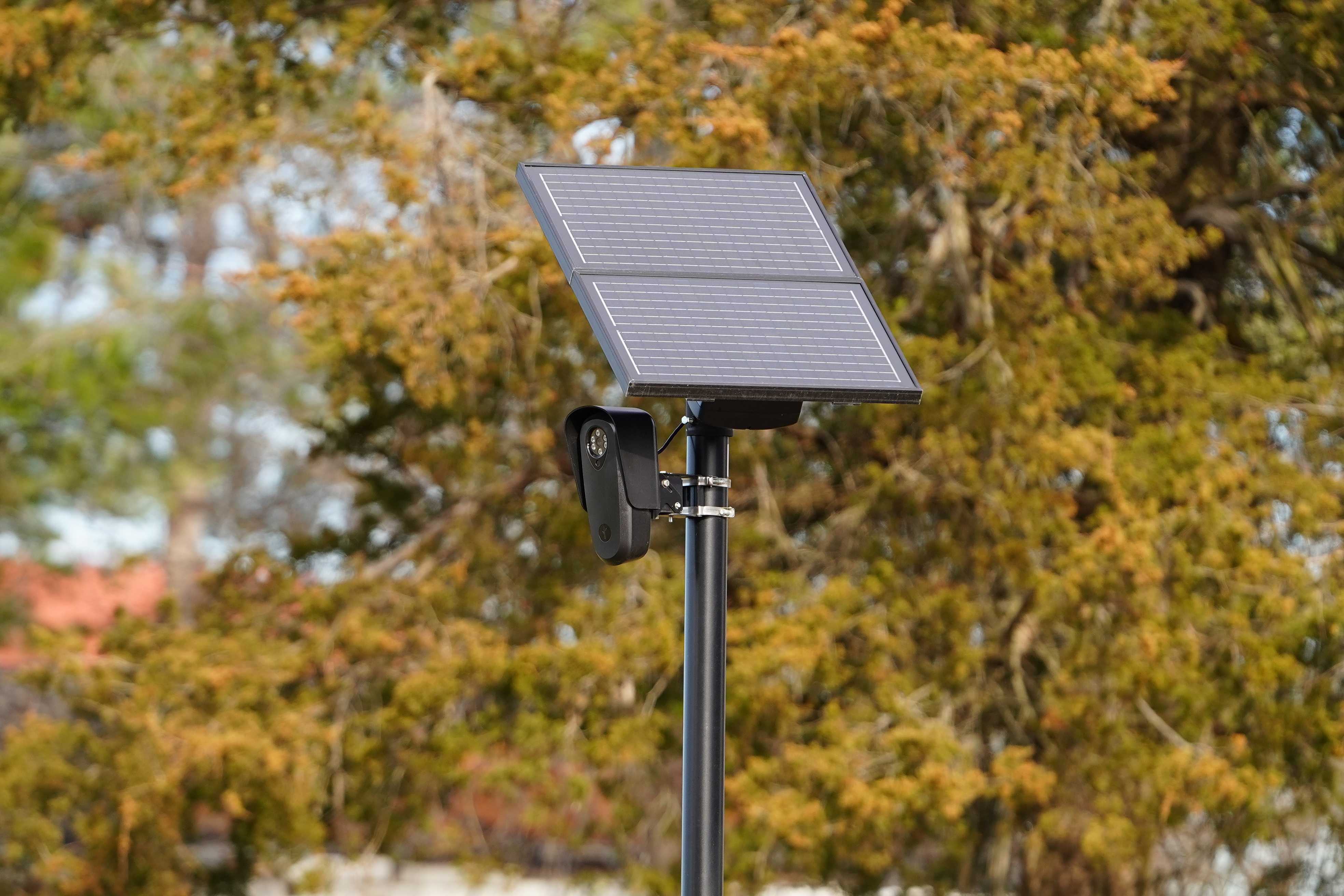
We have automated license plate readers, which I know we’re going to talk about. We have sound detectors that alert on gunshots, fireworks and sideshows.
And now we have drones — not just to deliver packages from Amazon, but also to deliver equipment during SWAT callouts, first-aid equipment and rescue equipment, and to get cameras into locations that officers otherwise wouldn’t have been able to see. All of which are good from an officer-safety perspective.
We also have real-time integration. This is probably the biggest thing: the ability to integrate these different technologies.
Our dispatch centers are able to integrate information, and some agencies have real-time crime centers that are able to integrate a lot of these things in real time.
Even going back to when we were young women, when I was waiting for my background check, I worked as a secretary. I remember another secretary and I were working on a project together, but the computers weren’t connected because that was not typical of office computers.
We had to do everything on a floppy drive and then switch the floppy drive. Once the file got too big, we had to switch computers. I would have to work on her computer when we were doing this project, and she would have to come work on mine.
Even back then, I was thinking, gosh, there’s got to be a way to put some cords into these computers and get them to talk to each other. I knew the potential was there. We weren’t there yet, and I certainly didn’t have the knowledge of how to do it. I just knew it would make my life so much easier.
Well, we have that capability now.
On top of that, we have AI and automation. We have the ability for computers to synthesize information in a way that they couldn’t before. We have cameras that will detect a red backpack and follow the red backpack.
There’s so much.
Jessica Stern
I think the public is really aware of some of the benefits of this technology.
In the last couple of years, the high-profile cases I’ve seen relied on being able to tell where particular people were, either through cameras or license plate readers.
We had Gabby Petito, who was murdered by her boyfriend, and it took a while for folks to find her and her boyfriend. Then we had the Moscow murders. It seems to me that without license plate readers, I don’t know if we would have ever caught Bryan Kohberger — in addition to all of the Ancestry.com-type data, too.
I think where people are getting a little uncomfortable is with the noncriminals, right? This idea that I haven’t done anything wrong, but now I’m being watched all the time.
From your perspective, what are the civil liberties concerns that play into this enhanced technology?
Christie Gardner
We absolutely have to balance the two.
The first issue is collection. These technologies are collecting a lot of information about us.
The thing is, they’re not interested in most of us. I come on campus almost every single day. You come on every single day. There is an ALPR that captures your license plate.
Does anybody ever look at that and say, “When was Dean Stern on campus?” No.
Now, if Dean Stern committed a crime and we traced Dean Stern from her car to the incident — or probably from the incident back to the car — then that would become more useful.
But just the fact that they’re collecting this information and it’s out there is scary.
There’s an enormous number of people who are not suspected of anything, and yet we are on public cameras when we walk into shopping centers, when we walk out in public, everywhere.
So there’s the collection of it. That’s one issue.
And just think about our iPhones. I get in my car to go someplace and it already knows where I’m going. Whether it’s because of my routine, it says, “Hey, traffic going to Cal State Fullerton is light today. Take the freeway.”
Or it knows I’m going to church. Or it knows I’m going to an appointment.
My iPhone knows all of this stuff. What is Apple doing with that information?
It’s useful to me, and I’m allowing it access to my location and my calendar for the point of convenience. So I’ve already kind of allowed that.
Jessica Stern
I do want to pause here because I think you’re making such an important point.
It’s not just public safety officers who are collecting our data. We’re also voluntarily giving it to private companies. I just wanted to underline that because it’s such an important point.
Christie Gardner
Absolutely.
Another piece we want to think about is: Is this technology accurate?
ALPR stands for automated license plate reader. You might also hear LPR. Some folks drop the “automated” part.
It reads license plate information. But what if it gets it wrong? Sometimes a T or an I can look alike. If there’s something on that license plate that makes an I look like a T — and we’ve all seen where people have put stuff on their license plates to make them a little covert — you’ve got to double-check that.
There are also times when you’ve had a license plate that was stolen, and it’ll hit on that. Maybe the license plate was recovered, so the person driving that vehicle is not actually driving a stolen vehicle. Somebody forgot to report to the police department that the vehicle or license plate was located.
There are a lot of reasons you need to verify the information.
One of my main concerns is who can access the information and for what purpose.
We really need to have some good safeguards and some good rails on this.
Does there need to be an investigative reason? Do I need to put in a case number or an incident number?
When I’m looking at policy, I’m looking for policies that require that, as opposed to just saying “investigative purposes.”
Having worked in law enforcement, I know that one is much harder to get around than the other. As a private citizen, I’m looking for stronger safeguards.
I’m also looking for whether the search is documented. If somebody searches me, is it documented? Does the system retain a log?
Does it know that Christie Gardner, ID number XYZ, went in and searched for Dean Stern on such-and-such a date at such-and-such a time, and here’s what she put in?
That would be an audit trail. Can we audit that? Can we look at who’s accessing it, who they put in, what the reasons are and who they’re searching?
This is how they’re finding some of these officers who have misbehaved and accessed systems that they should not have accessed and did not have the right to.
Those agencies are hopefully holding those officers accountable. In the agencies I worked for, we had officers who were fired for accessing information. We had officers suspended.
It is not a rare occurrence for a new officer or a new employee to try and do something they’re not supposed to do.
Jessica Stern
Who’s making that decision? Is it a law that an officer cannot go into these databases and search for Dean Stern, or is this kind of agency by agency? Who gets to make these decisions?
Christie Gardner
It’s a mix.
In some cases, we have legislation that dictates who can and cannot access specific information.
For example, officers have to have a “right to know” and a “need to know.”
When it comes to sensitive information, as a law enforcement employee, I might have a right to know specific information. As a dispatcher and crime analyst, I had a right to know and search all these different databases.
The question is: Did I have a need to know?
I couldn’t just go look up my doctor and say, “I wonder what my doctor’s past is.” Or, “This potential young man who is trying to court me — what is he like?”
I can’t do that.
If I were to do that, I could end up getting suspended or fired. It depends on what I did and how bad it was.
Folks are trained. We have good policies and safeguards. But people still do things they’re not supposed to do.
We have speed limits and folks still go past them. Does it mean that everybody’s going past them? No, not at all.
In most agencies — certainly any agency that I’ve worked for and worked with — they take data security really seriously. It’s not, “Do whatever you feel like.” It’s, “You shall follow the rules, and if you don’t follow the rules, you will be suspended, you will be fired, you will lose access to this.”
Jessica Stern
Is this related to the Fourth Amendment?
The Fourth Amendment prevents unlawful search or seizure. You can say more, but just in a nutshell, this idea that I have a right to my privacy as a citizen unless I’ve done something that merits being searched or something being seized.
Are these laws growing out of that?
Christie Gardner
They’re parallel.
You have these basic security protections, and you also have the Fourth Amendment.
The courts have had to catch up to the technology. One of the things that has been happening over the last 30 years is that technology is outpacing the courts.
Originally, we didn’t have cell phones. You just had wiretaps on landlines. There are very few landlines left.
Now, if an officer is able to get into your phone, they’re not just getting your phone calls. They’re getting your text messages. They’re getting your emails. They potentially have access to every place you’ve been.
Court cases have had to catch up to that. Laws have had to catch up to that.
With different types of technology, when do you need a search warrant? When don’t you?
When we’re in public space and we’re walking into a store, that store, shopping center, private entity or public entity can have cameras in public space. And we generally don’t have an expectation of privacy in public space.
That’s a key point.
Jessica Stern
Just to underline that: I do not have a right to believe I have privacy when I walk into a public space?
Christie Gardner
Right.
Jessica Stern
I’m trying to think, though.
Don’t judge me. I started watching The Wire with my son. I don’t know if you watch that.
Christie Gardner
It’s so good.
Jessica Stern
Right? I do fast-forward through the stripper scenes.
[Laughs]
The premise is that the Baltimore Police Department is trying to bust this drug ring.
The main drug actors are using a public phone to make all their calls. So the police department puts a wire on that public phone, but they have this intricate thing where they know they’re not allowed to listen to the wire unless the police officer who’s looking down at the public phone says, “Okay, I verify that somebody who we have under investigation is actually using that phone.”
Then they’re allowed to listen to the wire.
So there must be some restrictions on public space, right? That was a public pay phone.
Christie Gardner
Yes. There are restrictions.
I am not a legal scholar, so I’m going to be the wrong person to go deep on this question.
Our expectation of privacy is very limited in public space. We have much stronger protections in our house, in our backyard and at the front of our driveway.
Depending upon how long our driveway is, we may not have an expectation of privacy at the end of our driveway. If we live on a very long driveway, there’s something called curtilage.
That’s where we would want a legal scholar to come and really dive into these issues.
But for our purposes today, in general, we have a limited expectation of privacy in public space. That’s why these technologies are expanding and why we’re seeing folks have questions about whether or not we want this much surveillance in public space.
Going back to England and the U.K. — I’ll stick with that because I know that one better than Europe — they’ve had CCTV in public space far longer than we have.
They’ve been okay with it, and we have come along rather quickly to this idea of, “Oh, this is okay. This isn’t so bad. We’re able to solve crimes. We’re able to be protected.”
Now we actually have an expectation that cameras are in public space.
Years ago, we had a report of a crime on campus in an elevator in a parking structure. I won’t get into the specifics of this case, but it was public. You can find the public details in the Daily Titan.
Students were actually up in arms that there were not cameras in the elevators. Yet it was determined that in the elevator, you had some expectation of privacy, or that it was a slightly more private area than the general parking structure.
Jessica Stern
I’ve been surprised by this, too. There was another moment in Fullerton’s history where a group of folks who I thought might push back against cameras were advocating for more. They wanted more cameras.
In case all of our listeners are thinking, “Yes, cameras are awesome,” maybe we can flesh out what could go wrong with that.
I know some of the opinion writing has pointed to 1984. What is the danger?
I think one of the fears is that surveillance can be used to watch people for doing things that should be protected by free speech. It could be used to crack down on protesters.
In 1984, everybody had a camera watching them in their private house and they weren’t supposed to be writing or thinking certain things.
That’s what is so hard. There could become a line where being surveilled actually becomes quite dangerous.
Christie Gardner
And that’s part of the ALPR issue.
When Roe v. Wade was overturned by the Supreme Court, it went back to the states. Some states have protected a woman’s right to choose, and some states have limited that severely or completely outlawed it.
We have seen some of those states that have outlawed abortion request data from states that permit it in order to prosecute women having abortions.
That, I think most of us would say, is a very private issue.
Jessica Stern
Yeah.
Christie Gardner
The flip side of that is somebody on the other side is going to say that is not a private issue. That is another human being that is being murdered, and there’s a very strong public interest in that.
Jessica Stern
Right.
Christie Gardner
Here we’ve got the states competing, which maybe solidifies why something should be standardized at the federal level as opposed to states’ rights.
But that’s a whole other issue. Now we’re getting into federalism.
That would be a space where what is a very private issue to many is being surveilled.
That’s what gives everybody the bad name. That’s some of the concern: It can be used in this way.
Can we trust our law enforcement agencies? Can we trust our government not to use it in that way?
During COVID, China famously required everybody to have an app and use that app to check into different places. I don’t remember all the particulars, but that’s a concern.
If we fly — and I know you fly a lot — we now have facial recognition with our passports. When we’re in an international airport, we opt into facial recognition.
That’s a choice that I’ve personally made for convenience.
Jessica Stern
I’m so glad you’re bringing up convenience because I think that in this day and age, it’s not just a desire to feel safe. I feel more people are making this decision for convenience.
My husband grew up most of his life being a libertarian. His political philosophy is much more complicated now, but he definitely still has that in him.
He will never give his palm print to Amazon because I think it’s lurking in his mind, the danger that could come once all your data is known and it could be put to misuse.
Christie Gardner
That’s one of the other concerns.
Going back to what concerns we have: I mentioned collecting information, whether the information is accurate, who can access that information and for what purposes.
Then: Is that data protected and confidentially maintained?
I’ve made that decision with my passport in these airports because my photo is already on my passport. It’s already in these systems.
But at the same time, in the age of AI, who could get ahold of that and make it look like I’m saying or doing something that I’m not?
That’s a big thing.
I’m counting on Apple. I’m counting on Microsoft. I’m counting on my law enforcement agencies — whoever has all these technologies — that they’ve got it in a safe place.
Some of our agencies are much more sophisticated at this than others.
I worry less about our large departments than I do our very small departments. In Southern California, I think we have enough expertise and sophistication that I don’t really worry about our agencies — with a caveat.
I don’t worry about our agencies being bad actors. One of my concerns is whether they’ve sufficiently protected themselves and protected the data that they have.
I’m at very low exposure. Knock on wood, I haven’t been cited or arrested or anything like that. I don’t think I’ve been recorded in any really embarrassing way.
I have very low exposure, but I still want all my data protected. I don’t want there to be any chance that somebody can get all of my details because identity theft is a thing.
That’s more with our private companies than it is with our law enforcement, but I still want to know: Is it protected? Is it stored on a secure server that is heavily fortified by people who know cybersecurity?
Or is it on a standalone machine? Our small agencies can put stuff on a standalone machine and protect it heavily, just like we protect our research data.
Is the data part of a large network of vendor data, such as Flock or these others? And if so, can it be searched by other agencies, either with or without my permission?
Can my checkboxes get changed through system upgrades, as we saw happen recently?
Who owns the data? If Fullerton PD is collecting the data, does Fullerton PD own that, or does the vendor own the data? What can a vendor or somebody else do with it?
Can they sell it to a third party?
Thinking about my iPhone, it knows what time I go to sleep. It knows what time I wake up. Can they sell that information to somebody for a product?
And can information collected for one purpose be used for another purpose? Can it be used to train systems when I didn’t give it — or when the agency didn’t give it — permission to do so?
These are some of the things that agencies are looking much deeper into.
Some agencies were already sophisticated enough to know what to look for, and others are learning as they go. That’s just the way things happen.
Jessica Stern
I want to get into Flock and some of the data concerns. Before I do that, as a private citizen, how do I check all those great questions you just gave us?
When it’s Apple, I actually read the fine print. I know it’s a lot. It’s overload.
But what if I wanted to know about my own city? Let’s say I know they have cameras. I see them around. Can private citizens access that information?
Christie Gardner
You should be able to.
On the city website, police department website or sheriff’s department website, you should be able to go and look at their policy manual.
We are in the process of collecting information. As you know, the Center for Public Policy is working on a public safety dashboard to pull this publicly available information into a single place so that we can more easily search it.
We’re at the beginning phase of that, and it needs a lot more work and human verification, but we are starting to pull some of that publicly available information.
California laws require agencies to publish certain things. One of those things is a policy manual.
Jessica Stern
That’s so cool.
So one of the goals for the Center for Public Policy is to make it easier for citizens to see exactly what technology exists throughout California.
Christie Gardner
It’s a lot of different things. We’re also looking at crime rates and a variety of other things.
But one of the dashboards we hope to have is one that has technology and policies on there.
In California, we have really professional law enforcement agencies. They really do, I think, try to do the best that they can for us.
In the last decade, we’ve seen a huge focus on democratic policing and constitutional policing, where police agencies recognize that they are only able to operate and be good public-service agencies if they have cooperation from the community.
The only way they get cooperation from the community is if they have public trust.
If the public views them as legitimate, if they trust their police department, then what’s required of the police department is that they are accountable to the people. They’re transparent with data, and they treat us with respect, dignity and neutrality.
You see agencies really understand and appreciate the importance of this.
Even when we think about some of the things that Flock has self-admittedly done poorly and should have done differently when notified of some issues with their data protections, agencies — including our own chief of police here, Chief Frisbee — have responded.
We have not had any data breaches here on campus. But because he was less than comfortable with some of the protections that Flock has, he gave Flock notice. They’ve canceled their contract with Flock and will be going with another vendor that has a much stronger security infrastructure — both protection from other agencies being able to access data and firewalls between the agency and the vendor so that the vendor can’t go and see our information.
Jessica Stern
Let’s talk a little bit more about Flock.
At this point, we’ve really focused on these more theoretical issues with surveillance and safety.
I think in the public discourse, Flock and these license plate readers have become commingled. But as I’ve heard in some of your answers, Flock is a specific company that has made specific decisions — decisions that some police departments are criticizing and breaking with Flock over.
Can you lay those out a little?
Christie Gardner
Not all of them, but yeah.
ALPRs — automated license plate readers — are cameras. Motorola, Vigilant, Axon and Flock are several of the vendors out there.
Flock has a lot of agencies that use it, including in Orange County, L.A. County and the Southland.
California has very specific rules. Agencies cannot share outside the state of California, for exactly the reason I mentioned with abortion.
And we can’t share with federal agencies. Federal agencies can get a search warrant and still go through the court process, but we can’t just go share our ALPR data with immigration or anybody else.
From my understanding, it’s been alleged that those checkboxes could get overridden during system upgrades.
Jessica Stern
By “checkboxes,” you mean something like, “Do you want this data shared with federal agencies? No, I don’t.”
California police agencies have to say no by California law, but you’re saying that something might happen and all of a sudden it’s, “Oh yes, please share this data with federal agencies.”
Is that what you mean by checkbox?
Christie Gardner
Something to that effect, yeah.
Chief Frisbee would be a much better interviewee on this because he knows much more about it.
Jessica Stern
He wants to teach for us. Can I get him on the show?
Christie Gardner
We’ll have to talk.
[Laughs]
Maybe we can get him a second job.
There are protections. There are things that are illegal by California standards.
It’s my understanding — and I don’t work with Flock, I haven’t seen their backend system, I’m not with an agency, so I don’t know what you actually have to check — that there are checkboxes that would allow agencies to share with other agencies that overrode the legal protections.
Agencies didn’t even know that their information could be accessed by anybody outside of their agency or outside of their county.
Within Orange County, you’ll have networks. You can have networks of individual agencies that you share with.
Fullerton, Placentia, Yorba Linda, the Sheriff’s Department, Cal State Fullerton — it would make sense for our local agencies to share with neighboring agencies.
You can do that, and that’s what many agencies thought they were doing. But then there was some other checkbox, or something to that effect, that allowed the data to be seen by folks they didn’t want or expect to see it.
We have to be really careful because I want to make sure we understand that I haven’t seen the backend of any of this.
Jessica Stern
Thank you. I hear you clearly that at this point we’re relying on news reporting and private conversations.
But I think what’s clear is that one of the questions being asked is: How secure is the data?
You laid this out in the beginning. We need to know that these companies collecting our data are sharing it in ways that are legal.
That’s been one of the sources of questions.
Are there other questions that have come up in relation to Flock in particular that you know of?
Christie Gardner
I’m not as intimately aware of those things.
Jessica Stern
Is there more that you would like to say — and some of this has been sprinkled throughout — about this region and campus and what surveillance technology looks like in this context?
Christie Gardner
Technology is widely used throughout Southern California.
We know specifically more about Orange County. The Center for Public Policy is building, like I said, a statewide public safety data dashboard. We’re looking at technology statewide.
We’ve done some pilot work with Orange County agencies to learn a little bit more about what they use and how we ask these questions in the best way possible to understand what technology is out there, how it is being used and what the safeguards are.
Our preliminary work shows that most of these technologies are part of routine, contemporary policing.
Most Orange County agencies use body-worn cameras, ALPRs, fixed live-view cameras — traffic cameras and other cameras in public space — and conventional UAS drones.
Those drones are ones that can be deployed basically out of the trunk. It’s in a box, and you deploy it over a park.
If you’re looking for a lost hiker, you can use it. You can surveil a crime scene. You can take measurements. There are lots of uses for drones, including finding missing persons.
We have some agencies that operate real-time crime centers.
What’s growing are drone-as-first-responder programs and real-time crime centers where you’re integrating this information.
We’ve looked at policies and asked agencies about their policies, and agencies are thinking very seriously about governance.
In fact, the agencies we’ve talked to have specifically not rolled out technology until they have an appropriate, robust policy to go with its use.
Before rolling this technology out, we know how we’re going to train officers on its use. We know who is going to be able to access it, whether it’s going to need a supervisor, case number or incident number.
How are we going to govern its use? How are we going to log and audit its use?
They’re really thinking about those things because the last thing they want is to lose access to this technology.
They are keenly aware of public trust and the need to maintain public trust, and they very much want to do that.
As private citizens themselves, they are grappling with the same issues.
It’s fascinating to hear officers and command-level staff who are putting these systems in place and growing these technological programs thinking through these issues from both sides.
They’re thinking about it from a public-safety agency standpoint: “How can this help us?”
They’re thinking about it as private citizens: “Whoa, do I want my police department doing this?”
When you’re talking to police chiefs and commanders, they’re thinking about it from the accountability perspective and asking: What could go wrong? What can go right? What problem are we solving? Do we need this technology to solve that problem? What’s the cost-benefit?
They’re looking at it from a variety of different perspectives.
From my experience talking to a lot of individuals around here, they’ve been very conscientious in their thinking and in wanting robust protections.
Jessica Stern
That’s great.
Can you tell us a little bit more about the technology on our campus and its use?
Christie Gardner
One of the things I would like to mention is that we do have essentially a perimeter of ALPRs on campus. We also have a healthy network of cameras on campus.
That has been very successful for us in catching criminals on campus.
In speaking with the chief, he told me that nearly every suspect they’ve identified through ALPRs has not been affiliated with the campus.
These are strangers coming onto our public campus, committing crimes against our students, faculty and staff. The reason we’re able to find them and arrest them is because we have this system of technology.
He told me about someone who wasn’t affiliated with Cal State Fullerton who repeatedly entered faculty classrooms uninvited and reached into a bag in a way that alarmed faculty. It was intentionally meant to scare faculty and students.
This person came back several times, and on the third time they were able to arrest him because they were able to use the ALPR system.
I know we also had an event on campus where somebody had assaulted one of our TSU workers. That person then left and went over to the library.
The dispatcher was able to find that person in the library, talk to the officers and direct the officers to that person, and that person was able to be arrested.
Again, these are folks coming onto our campus. About 90% of people arrested for committing crimes on campus are not CSU-affiliated staff, faculty or students.
When we think about the Cal State Fullerton campus specifically — being in the middle of an urban area, right off a freeway and near other freeways — being able to have some level of protection has benefited us. I think we’ve seen a lot of success.
On the flip side, you want to be careful with the civil-rights issues. You want to trust that our department is not accessing that information to find out, “What time did I get to campus? What time did I not?”
There is that level of trust we have to have, and that does not come easily to people. And it shouldn’t.
We should hold our departments accountable, 100%. I think that’s really, really important.
As the chair of the chief’s advisory board, having done research in this area through the Center for Public Policy and being a former practitioner, I have the utmost confidence in Chief Frisbee and our police department.
In fact, they have some of the strongest safeguards regarding their use of technology and their regular audits, to the point where Chief Frisbee doesn’t even have access to ALPR.
If Chief Frisbee wanted to look into the ALPR, he would have to go to one of a very small number of people at the department who actually have access to that.
They need an incident number or a case number. It’s not like he can just do anything.
For me, that’s really the heart of this.
If we’re going to trust our agencies with this technology, we need to have good safeguards. We need to trust that they’re writing good policy.
We have pending legislation. SB 13 is pending legislation that will further restrict and narrow when ALPR can be used, who can access it, how long you can retain it and all that sort of stuff.
Jessica Stern
The other thing I will say is that Chief Frisbee and the team here are good about making themselves available.
They present at Council of Deans, and I’m the one asking, “How long do you keep that data? Are you using facial recognition? Do you know how inaccurate facial recognition can be?”
I think we also need to make sure our community is always asking these tough questions.
I’ve been really impressed by how Chief Frisbee is always willing to answer and engage in those questions.
One of the things that you listed in your first list when you were going through some of the issues with technology was accuracy.
I have been a victim of getting a ticket when they misread my license plate.
Christie Gardner
Right. So that would be parking.
On campus, we’ve got two ALPR systems.
One is with Cal State Fullerton PD, and theirs is very closed in terms of who can access it. Like I said, there’s a very small number.
Then we have our Parking and Transportation ALPR system, which is its own thing. It does not share with the PD. The PD does not share with Parking. They’re completely separate.
The Parking and Transportation ALPR system is solely for parking permit management and enforcement.
Jessica Stern
Okay.
Christie Gardner
But that’s where human verification comes in.
You need to go and look and see that this I is a T or whatever. It absolutely sometimes gets things wrong.
I’ve been in the dispatch center where it has alerted to stolen plates. But that’s often not a concern because maybe the front plate is missing and the back plate is on.
They recognize which hits not to get excited about because they recognize that somebody had a license plate stolen.
It’s already disconcerting that that can happen. To then have to be subject to police interrogation every time they drive through an ALPR or drive onto campus — that’s not something they’re doing.
They’re looking for stolen vehicles or vehicles associated with missing or endangered persons.
We had a situation a couple of years ago at a softball game. It was a super hot day, over 100 degrees. This was the Big West Conference tournament, and an elderly member of a visiting team’s family went missing.
They were looking for him and looking for him. I said, “Wait, did you call the police?”
“No, I don’t want to bother the police.”
I said, “I promise you, if we call the police, they will help us find him, and we can find him quickly.”
It was a 100-plus-degree day. I was worried about this person.
Our dispatchers found the person wandering in another part of campus using cameras on campus.
They were able to find and locate that elderly person.
The family knew when this person had left. They were standing outside the bathroom, something along those lines. They needed to find this person in whatever they were wearing and then follow him through the cameras.
It was simple once they were able to do that, but first you need to call the police department to let them know your loved one is missing.
Those are some of the success stories, and I think we want to celebrate those as well.
Jessica Stern
Dr. Gardner, thank you so much for being here to talk about surveillance and civil liberties and what’s happening here on campus.
Christie Gardner
Thank you.