

HSS STUDENT SUCCESS CENTER
(H-112)
The center provides students with access to graduation specialists, academic advisors, career specialists, and a study abroad coordinator.
Academics
For most students, the pursuit of a Bachelor's Degree involves the balancing of individual coursework, family responsibilities, employment, and personal development. As you move through your studies, we encourage you to be patient as you adjust to the expectations of the university. It is important that you communicate to your support group that completing this milestone is a commitment of several years. Success requires balancing academic, social, and personal responsibilities.
As you learn new skills and face new academic experiences, different daily activities will compete for your time. You will need to dedicate time for homework, course assignments, participating in a club or cultural organization, conducting individual research, study groups and class projects, as well as exercise, hobbies, family responsibilities, and, for many students, paid employment.
And although the expectations of the university may be new for you as well as for your families, we hope you come to value the relationship that exists among your major coursework, your professional direction, and your individual growth.
Introduction to Humanities and Social Sciences
As you begin your studies here at Cal State Fullerton, we hope you find a place in the College of Humanities and Social Sciences (H&SS).
Whether you have declared a major or are ready to explore, H&SS has something for you. Our College houses more than twenty departments and programs that will help you develop intellectually and individually as you build the skills for rewarding professional careers and lifelong leadership in your community.
The following pamphlet includes information about services and resources that are available to you as an H&SS student. We are looking forward to seeing you around and we welcome you and your families to the College of Humanities and Social Sciences!
Enrollment Statistics
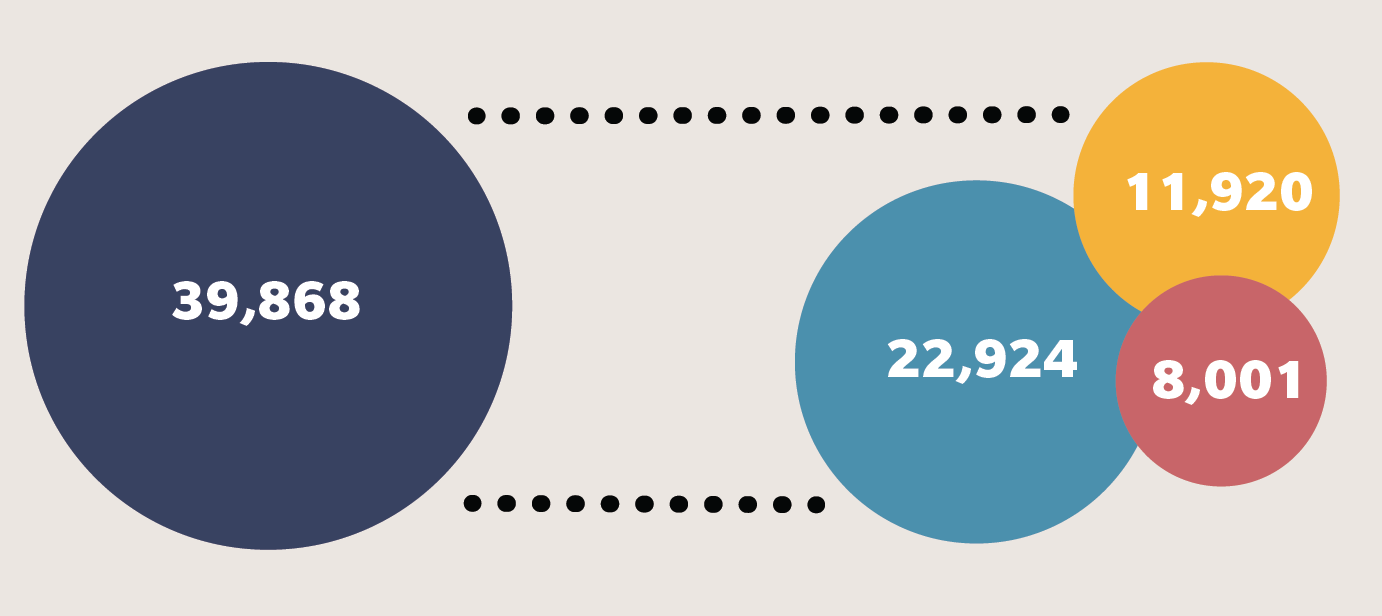
Fall 2019 semester
Dark Blue: Total Cal State Fullerton student enrollment for this class term
Light Blue: Number of women enrolled (57.5%)
Yellow: Number of first generation students (29.9%)
Red: Number of students in the College of H&SS (20%)
Major and academic advisement
Meeting with an advisor during your first two years is extremely important. In an analysis of Psychology and Criminal Justice majors, Orozco and Saavedra (2018) found that meeting with an advisor in the first or second year was predictive of graduating in four years –compared to five.
Academic Advisement Center (GH-123 B)
The center houses advisors who can help students construct a study plan that incorporates the general education requirements every student must fulfill. For first time freshman, it is advised to complete this broad-ranging set of courses in the liberal arts and sciences during your first two years on campus. For transfer or returning students, you can visit the center if you have questions regarding GE courses.
Major Advising
In addition to the Academic Advisement Center, students have Major advisors which are separate. Once you have selected a major, began completing your GE requirements, or have completed them at another institution, you will gradually complete major courses. It is recommended that you meet with an advisor from your major department at least once a year and identify the appropriate courses needed to graduate.
Student Resources & Services
The university has put in place the following resources and services that are available for all students to access.
Office Hours
All university professors allocate time to be available in their offices to interact with students outside of the scheduled class time. Students can utilize and benefit from this one-on-one time to ask questions about a topic raised in class that they did not understand, seek advice about succeeding in the class, or talk about graduate school or career opportunities. Professors encourage students to integrate office hours as part of their academic routine. Students who visit their professors during office hours are more likely to participate and succeed in class.
Mentor(s)
A mentor is a guide or role model who can support the academic life of a student. Professors, administrators, and staff can all serve as mentors. Mentors can help students to envision a path to success by pointing out opportunities or roadblocks that they experienced in their own lives as students. When students apply for jobs or graduate school, a mentor can be just the right person to write on their behalf in a letter of recommendation.
Internship(s)
Although some degree programs require students to complete an internship, internships provide all students the opportunity to gain work experience related to their field of study and to learn how the skills they are learning in college can be applied in the workplace. Because employers often prefer applicants with job experience, enrolling in an internship during college can make an important difference after graduation. For internship opportunities, visit the Center for Internships & Community Engagement (LH-206) and the Career Center (LH-208).
Tutoring
The University Learning Center (ULC) and the Writing Center provide all students free tutoring services. The Writing Center is located on the first floor of the north side of Pollack Library, and the ULC is located on the second floor. Academic Departments To explore a complete listing of all H&SS academic majors and minors offered visit www.fullerton.edu/academics/